
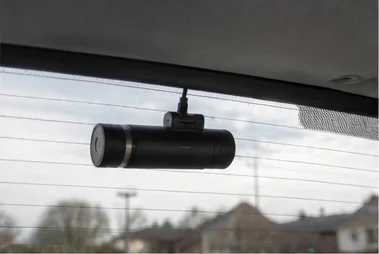
Best SD Card for Dash Cam: The Right Choice for Taxi and PCO Fleets in 2026
Sheriff Subair
The wrong SD card does not fail immediately. It fails months into service, mid-shift, exactly when a taxi driver or PCO operator needs footage for an insurance claim or a passenger dispute, and by then the evidence is gone.
That is the real question behind “what is the best SD card for a dash cam”: not which card has the biggest number on the box, but which one is still readable when it matters. For a single driver, a failed card is annoying. For a taxi company running twenty vehicles, it is a risk repeated with every card, in every vehicle, on every shift.
This guide names the specific cards worth buying in 2026, drawn from UK forum reports, manufacturer specifications and independent testing. Then it makes the case most guides skip: that fleet operators buying one card at a time are rebuilding the same failure point into every vehicle they add.
Why standard SD cards fail in dashcams
Skip the cheapest card on the shelf. Stick to a brand you have heard of: money saved on an unbranded card is not worth the footage you lose.
The one specification that matters is whether the card is rated for continuous overwrite, sold as “high endurance” or “pro endurance”, not a standard consumer card built for occasional photo storage. If your card keeps failing or footage keeps disappearing, our guide on dash cams that keep overwriting footage covers the fix.
The extra cost is modest: UK buyers report spending under £150 on a reliable camera and card combination. Beyond endurance, size capacity to your driving hours and check for V30 or U3 speed in 4K.
The best SD cards for dashcams in 2026
The best SD cards for a dashcam in 2026 are the Samsung PRO Endurance and the SanDisk High Endurance. Both are corroborated by UK motoring press and independent testing, not just manufacturer marketing, and both are built for the continuous overwrite that standard cards cannot handle. For heavier 4K or multi-camera use, SanDisk MAX Endurance is the stronger choice.
This is not one reviewer’s opinion. The same three cards come up again and again in UK dashcam forum discussions.
The price gap between an endurance card and a standard one is small next to the cost of losing footage at the wrong moment. Expect to pay roughly £190 to £200 for a 128GB to 256GB card.
Samsung PRO Endurance: best overall
Samsung PRO Endurance earns the best overall recommendation because of one number: the 256GB card is rated for up to 140,160 hours of continuous Full HD recording, more than sixteen years of constant use, a disclosed spec rather than a marketing claim.
It is not just Samsung’s figure: an independent hardware review outlet with no commercial ties to Samsung corroborated the same numbers.
One caveat is worth naming directly: a small number of camera manufacturers, VIOFO among them, have advised against pairing this card with their own cameras. That is a compatibility note, not a wider reliability problem, and does not apply across the rest of the market.
UK owners who have switched report it running reliably at a price comparable to the unreliable generic card it replaced, a safe swap rather than an unnecessary premium.
SanDisk High Endurance: best value
SanDisk High Endurance earns the best value label from its own spec sheet: the 512GB card is rated for up to 40,000 hours of continuous recording, at a lower price than the top-rated Samsung card, a genuine trade-off rather than a downgrade.
One UK owner has run SanDisk High Endurance cards across three separate dashcams for three years without a single issue, exactly the consistency a multi-vehicle operator needs to see.
Some buyers are sceptical that “endurance” branding means anything beyond marketing copy, which is fair given vague packaging, but manufacturer specifications and independent teardowns confirm real differences in build quality.
One honest caveat: these cards can lose write speed in high heat, which matters for vehicles parked in direct sun through long shifts.
SanDisk MAX Endurance: best for 4K and heavy use
For 4K recording, multi-camera setups, or a taxi doing back-to-back shifts, SanDisk MAX Endurance is the right call. It is rated for up to 120,000 hours of continuous recording, the highest in SanDisk’s own endurance range and three times the hours of the High Endurance card, a real upgrade for heavy use rather than an arbitrary step up in price.
Recent UK forum discussion recommends it for VIOFO cameras, a brand common in commercial fleet setups, confirming this is current, lived practice rather than dated advice.
A minority of users report dissatisfaction even with SanDisk’s endurance range under constant dashcam rewriting, an isolated experience, not the pattern in manufacturer data, independent testing or the wider owner community.
What size SD card does a dashcam need?
Capacity matters less than most buyers assume. Once you have picked an endurance-rated card, the real question is sizing it to how you actually drive, not maxing out capacity.
As a working guide, a 64GB card holds roughly eight to ten hours of continuous Full HD footage, enough for a full day’s driving on most single-camera setups. Dual-camera and 4K setups need more: one two-camera user needed 512GB for close to forty hours of dual-channel footage.
That matters most for fleet vehicles. A second, rear-facing camera roughly halves the recording time a given capacity provides, so front-and-rear vehicles need to size up accordingly. Which raises the next question if you run more than one vehicle: what changes when the decision is not about one card, but the whole fleet?
For fleet operators: standardising SD cards across multiple vehicles
Everything so far has answered the question one vehicle at a time. Running more than one changes it entirely, and this is where every other guide stops.
Intact Insurance’s (formerly RSA) fleet case study work found that a systematic, data-driven approach to fleet camera technology produces measurably better safety and risk outcomes than an ad hoc, vehicle-by-vehicle approach. The same logic applies to SD card choice: one proven card across every vehicle, not whatever was cheapest on the day it was bought.
Standardising is not a novel idea dressed up for fleets. The SD Association, the industry body that sets SD card specifications, exists because consistent standards make deployment simpler at scale. UK bulk supply channels make this practical, not theoretical, across ten, twenty or fifty vehicles. Our taxi dashcam guide covers the wider setup decisions alongside this, and one buying decision, made once, removes the inconsistency between vehicles that causes different failure rates across the fleet. If the fleet runs mixed camera brands, check compatibility before ordering in bulk: the VIOFO caveat noted earlier against Samsung PRO Endurance is exactly the kind of clash that undermines standardisation if it is missed.
How often to replace dashcam SD cards
Reformat your dashcam SD card inside the camera itself, never on a computer, and do it regularly to extend its life and prevent the corruption that causes footage to disappear.
How often depends on how hard the card works: once a month for a typical private driver, but every two to three weeks for a taxi or PCO vehicle in near-constant use.
Formatting is not a replacement plan. Budget for a full replacement roughly every one to two years for vehicles in continuous use, rather than waiting for visible failure, since that is what stops you losing footage at the exact wrong moment this article opened with. If your dash cam has already stopped saving footage, our guide on dash cam not saving footage walks through the fix.
Frequently asked questions
What is the best SD card for a dash cam in 2026? Samsung PRO Endurance or SanDisk High Endurance, both built for continuous overwrite recording rather than occasional photo storage. For 4K or multi-camera use, SanDisk MAX Endurance is stronger.
How often should I replace my dashcam’s SD card? Roughly every one to two years for a vehicle in daily use, with the card reformatted inside the camera every two to three weeks in between.
How long does TfL require dashcam footage to be kept for licensed vehicles? TfL sets a defined retention requirement for CCTV and dashcam footage in licensed taxis and PHVs, and its published guidance references a 28-day figure, though wording varies across TfL’s materials. Check TfL’s current CCTV guidelines for the exact requirement on your taxi or PCO licence, and leave margin so a card fault does not put you in breach.
Buy the right card, format it on schedule, and replace it before it fails, whether you run one vehicle or fifty. Or skip the card management entirely: see how Traknova’s fleet dashcam stores footage off the vehicle in the cloud, so there is no card left to fail.